
 the siteDiscover the Minecraft production workshop.
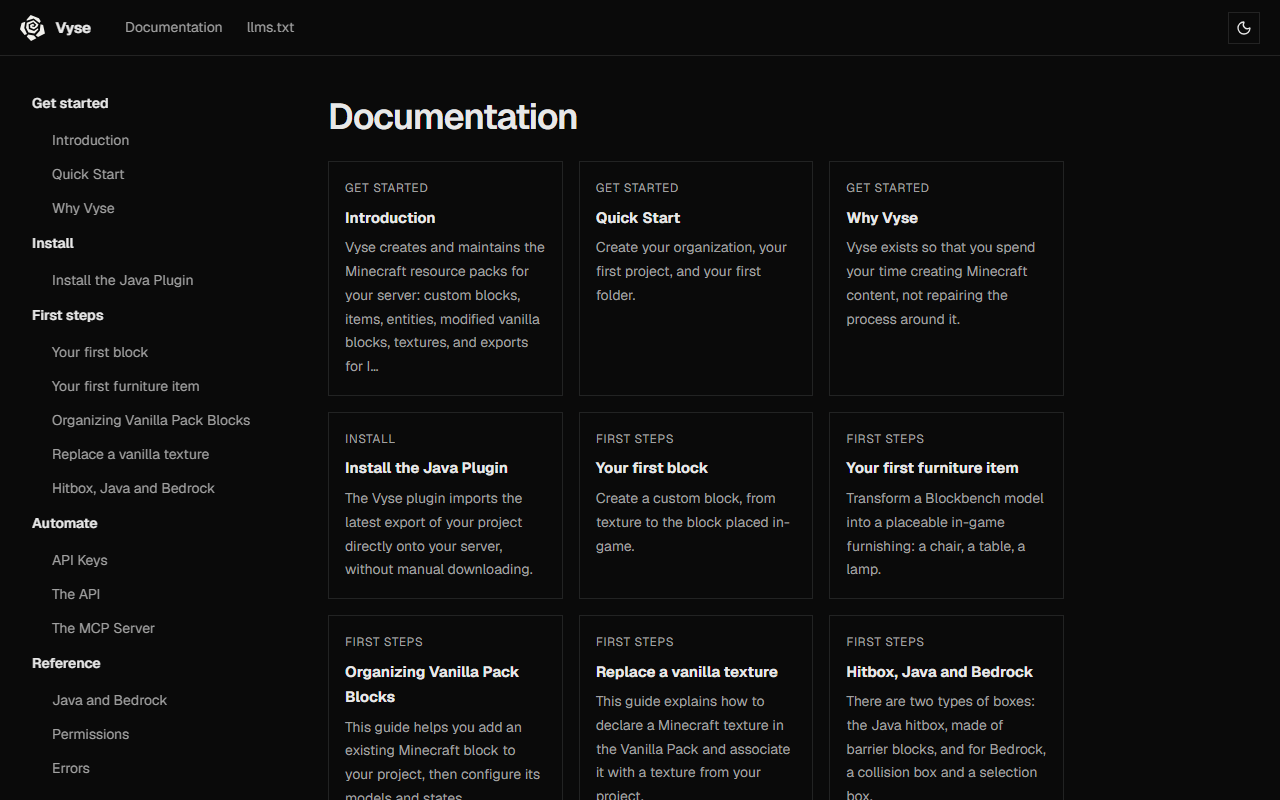 DocumentationConsult the guide and Vyse resources.
- workflow
- 3 steps
- team
- 1 workspace
- formats
- Java + Bedrock
- access
- coming soon
import, organize, export
shared resources and context
Bedrock still under construction
platform migration in progress
Why Vyse
On a Minecraft server, a custom block or item is more than just a model. It requires linking textures, states, identifiers, definitions, and sometimes multiple output formats. When these elements live in separate folders, a small change can trigger a long chain of manual checks.
Vyse starts from this real work: giving each resource a clear place and keeping its links visible from the first import to the delivered pack. The workshop serves both an individual creator and a team that must hand off a project without losing its context.
Create more. Configure less.
The workspace, screen by screen
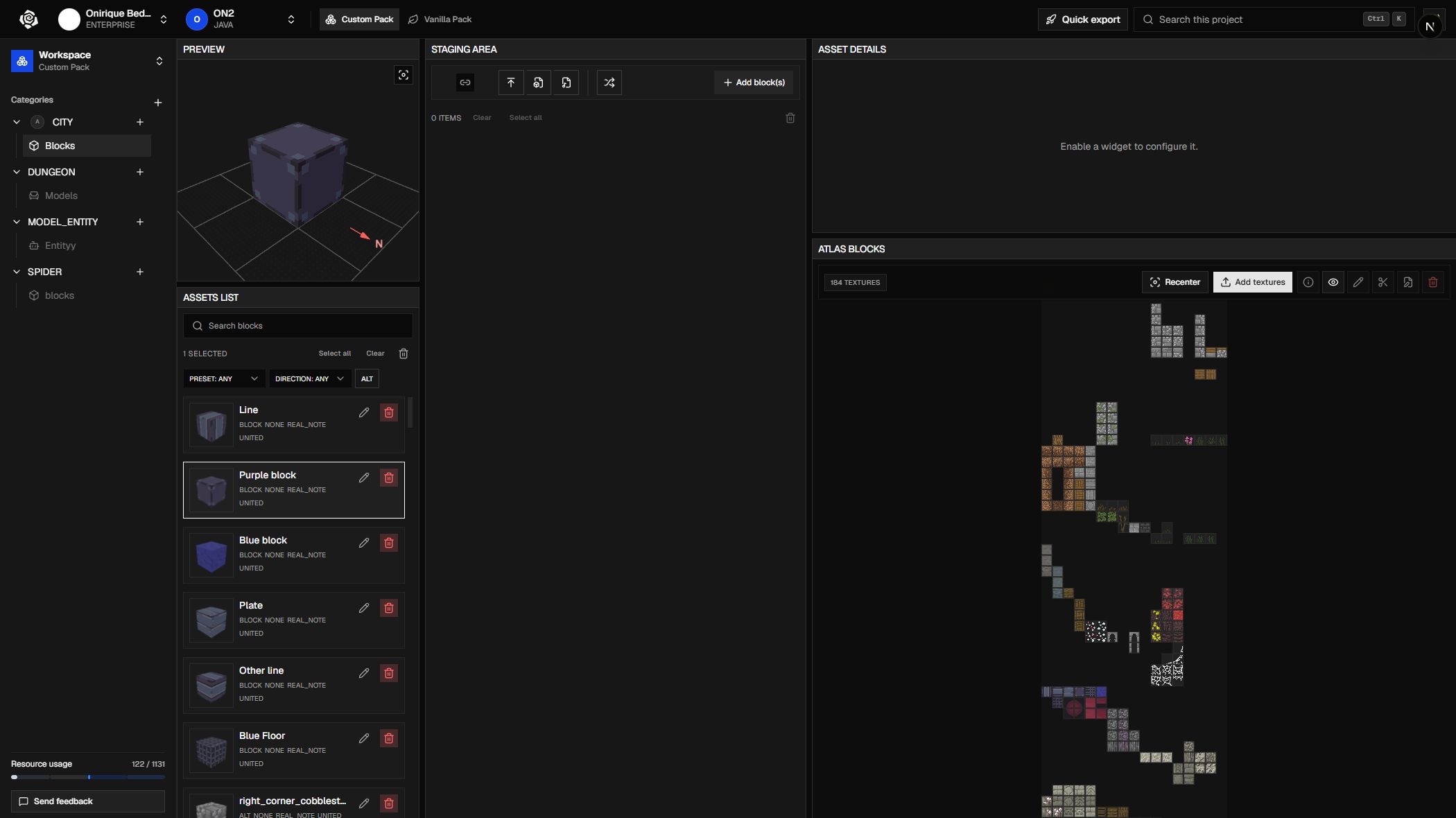
The workspace is the entry point for work. The sidebar locates each folder in the project; selecting a block displays its 3D preview, its card in the list, and available textures in the atlas. The central area is used to prepare changes before saving them.
- project tree
- choose a category and open the folder where you're working
- preview
- inspect the folder's contents in its dedicated space
- preparation
- add blocks or furniture before saving changes
- textures
- view the corresponding atlas for the resource type
Resources that remain linked
In Vyse, an organization contains projects, then categories and folders. Project search traverses these views: a single query can retrieve a category, block, or export with its location. Prefixes allow targeting a specific resource type directly.
The application also unifies vanilla resources and block state editing. A category can define what an external contributor is authorized to see.
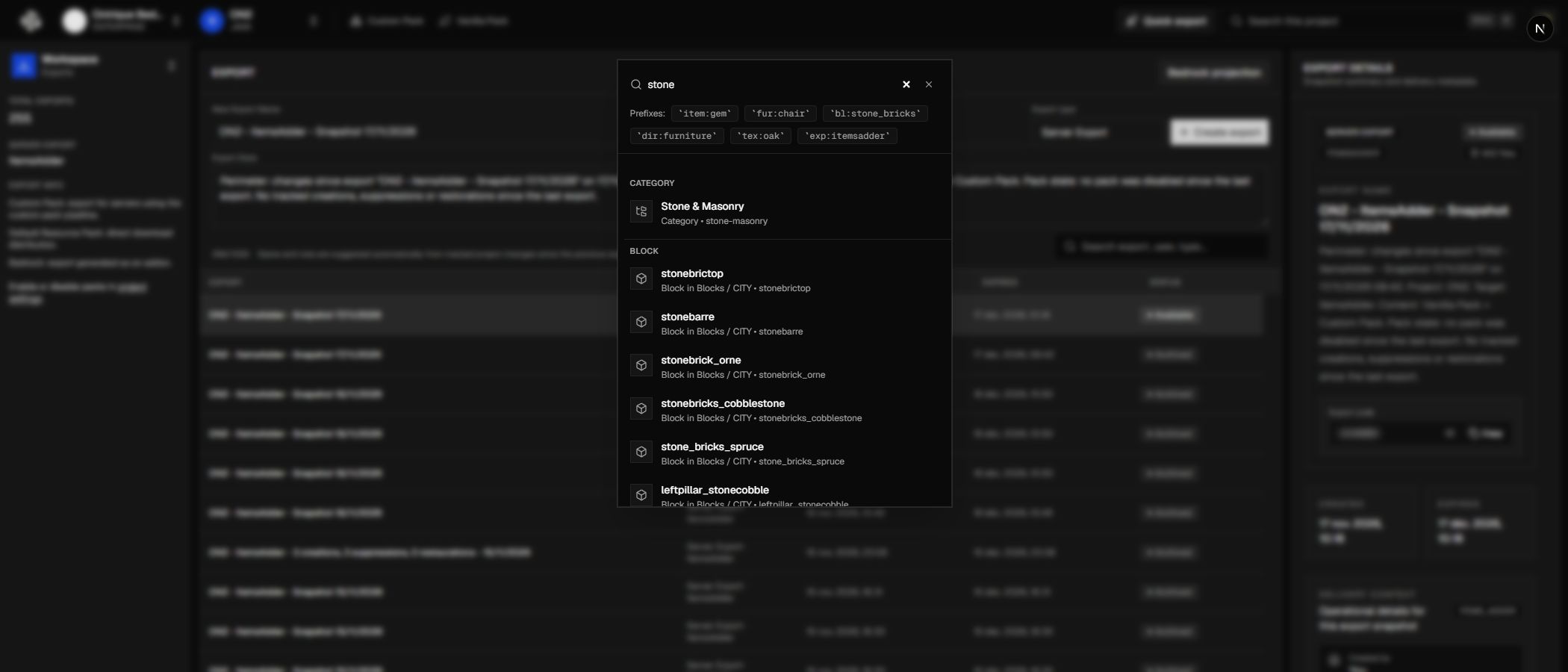
- catalog
- retrieve custom content and vanilla references in the same place
- atlas
- place and inspect textures on a visual canvas
- states
- work on block variants while preserving their links to models and textures
- access
- share a project or category according to each person's role
A project readable by multiple people
An artist, a builder, and a developer don't need the same screen, but they need to work on the same resources. Hierarchy and search give each a path to the right asset. Changes are broadcast to authorized people, and the activity log helps understand what changed.
The trash preserves an element's place in the hierarchy. Restoring a folder or category retrieves its resources with their context, instead of reconstructing the project from scattered files.
One source, multiple outputs
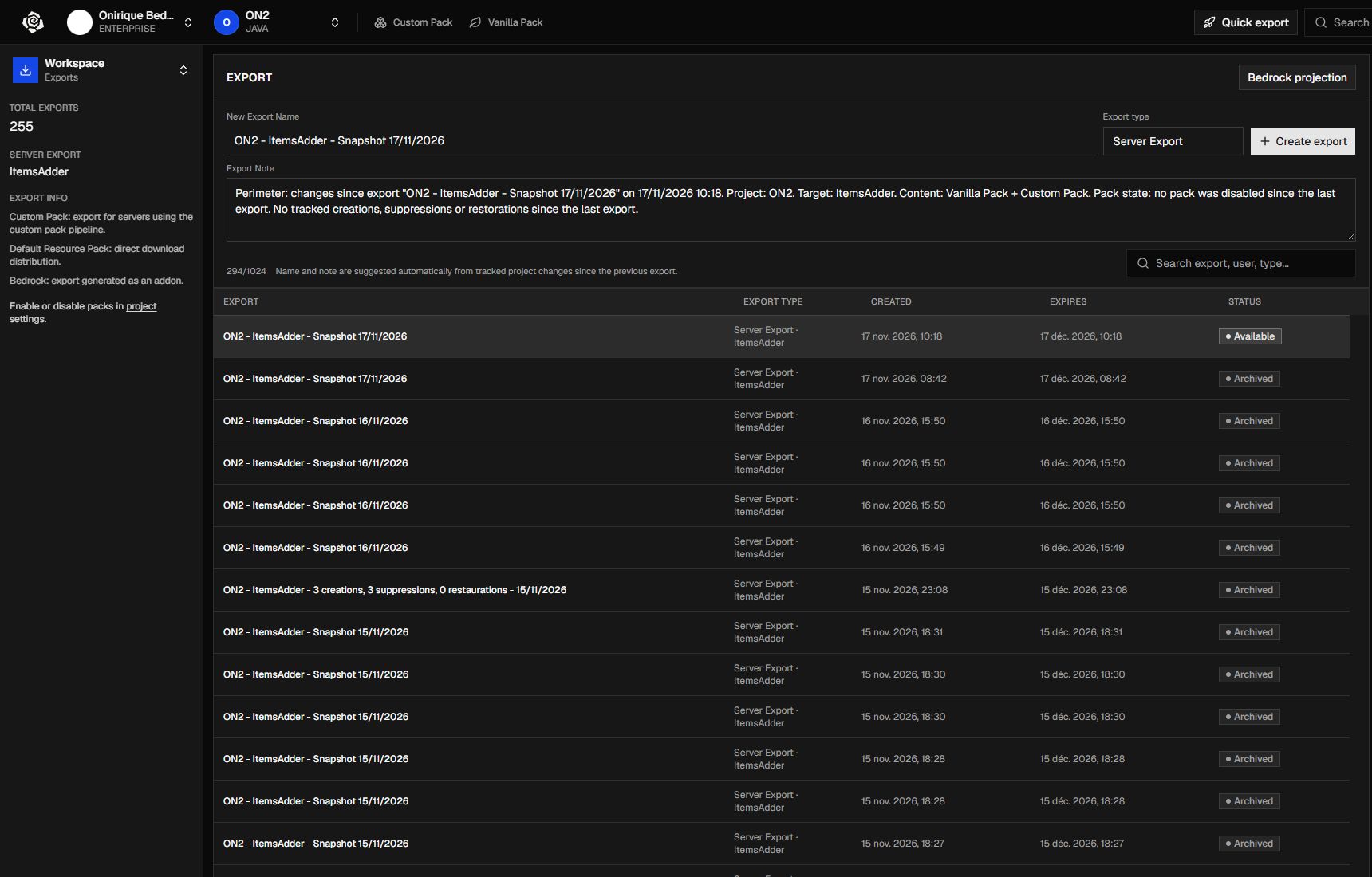
The Java project remains the source of assets. The export can generate a resource pack and the necessary definitions for server tools, including ItemsAdder. Stable identifiers prevent an element's slot from changing with each delivery.
The Bedrock view reads the same Java assets and retains only choices specific to that destination, such as block inclusion. It does not duplicate original models. For now, full conversion is not yet published: Vyse refuses an incomplete Bedrock export.
Today
- Java project as the source of truth
- assets and textures organized in the workshop
- Bedrock projection of blocks and furniture
- Bedrock inclusion setting for each asset
Still to be built
- geometry and materials conversion
- block state correspondence
- PBR textures linked to source textures
- versioned Bedrock publication
The Bedrock preview shows what could enter an export; it does not mean that conversion or the final Bedrock pack is available yet.
What comes next
Vyse's roadmap is a living document: ongoing work, its status, and release notes are tracked in one place. These steps set a technical direction without promising a release date.
- Complete the Bedrock conversionAlign Java asset geometry, materials, states, and collisions with their Bedrock outputs.
- Add PBR texturesKeep generated settings and variants alongside source textures without overwriting them.
- Publish reliable versionsValidate complete packs and produce immutable manifests for Regolith deliveries.
The approach
Vyse was born from a production need: our Minecraft projects require extensive custom content, often created by multiple people. I wanted the pack structure, access rights, and exports to follow the creation workflow rather than becoming a separate task.
The current migration to a more robust production infrastructure supports this ambition. Public access to the platform remains in preparation during this transition.
- interface
- a visual workspace to create, organize, and inspect resources
- server
- an API that keeps identifiers, permissions, and relationships consistent
- delivery
- exports built from the project without multiplying sources